

Setting up a chessboard correctly is the first step toward playing a proper game of chess. Although the process is straightforward, beginners often make two common mistakes: placing the board in the wrong orientation and arranging the chess pieces in the wrong positions. Fortunately, getting it right is easy once you understand a few simple rules.
In this guide, you’ll learn how to position the chessboard correctly, arrange all 32 chess pieces in their starting positions, and remember where each piece belongs. By the end, you’ll be able to set up a chessboard confidently and be ready to make your first move.
Step 1: Position the Chessboard Correctly
Before placing any chess pieces, you need to make sure the chessboard is facing the correct direction. The easiest way to remember the proper orientation is the rule “white on the right.”
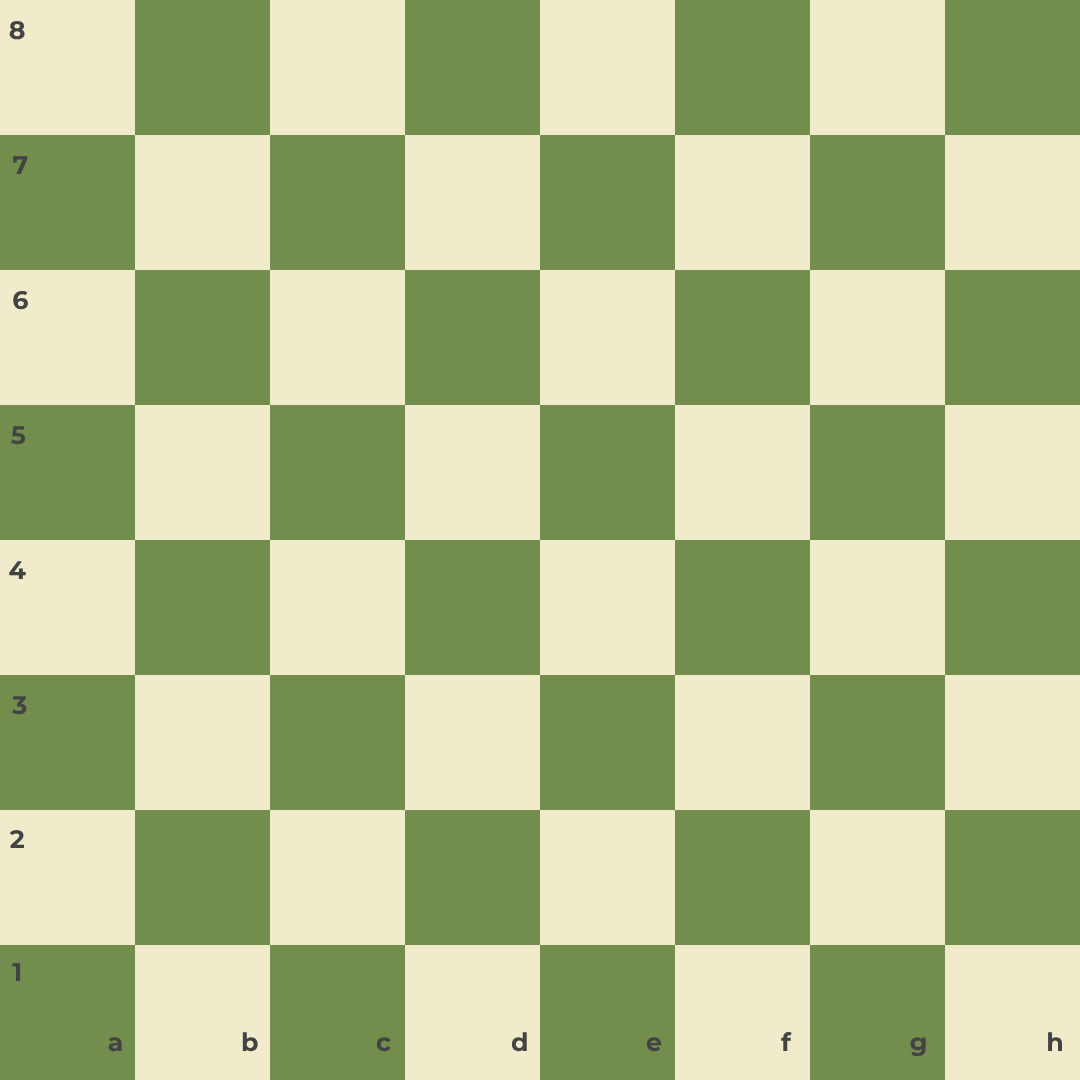
This means that the bottom-right square nearest each player must always be a light-colored square. When looking at the board from White’s side, the bottom-right square is h1, which must be light. If the board is rotated incorrectly, the pieces will not be arranged in the standard starting position.
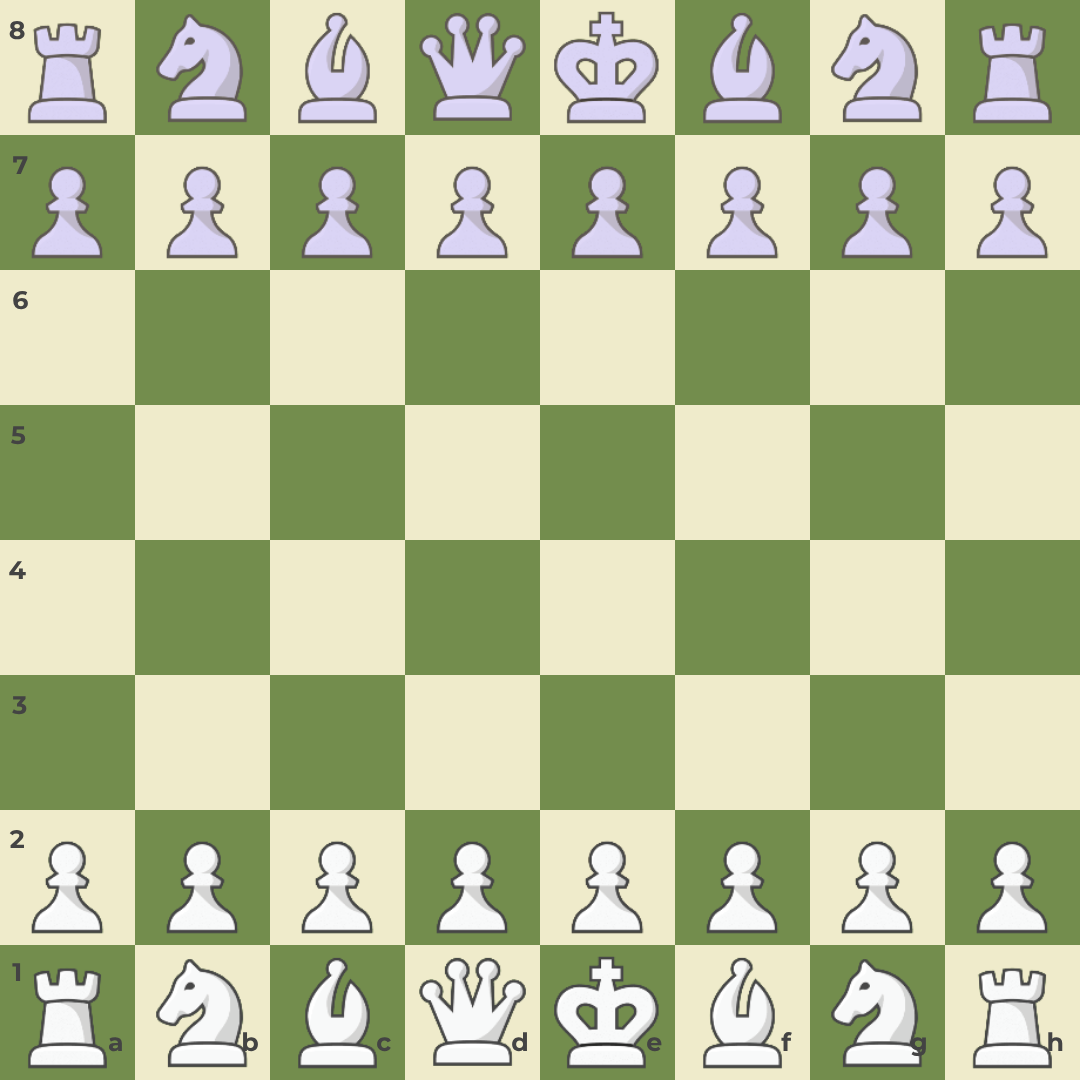
Take a moment to check the board’s orientation before moving on to the next step, it should look something like the image below.
Step 2: Understand the Chessboard Coordinates
A standard chessboard has 64 squares arranged in eight rows and eight columns. To make it easier to identify each square, chess uses a coordinate system consisting of letters and numbers.
The eight vertical columns are called files and are labelled with the letters a through h, from left to right when viewed from White’s side. The eight horizontal rows are called ranks and are numbered 1 through 8, starting from White’s side of the board and moving toward Black’s side.
Each square has a unique coordinate made up of its file letter followed by its rank number. For example, e4 refers to the square in file e and rank 4.
Understanding these coordinates makes it easier to follow chess instructions, arrange your pieces correctly, and learn more advanced chess concepts. You’ll also encounter this notation in chess tutorials, opening guides, and explanations of how pieces move.
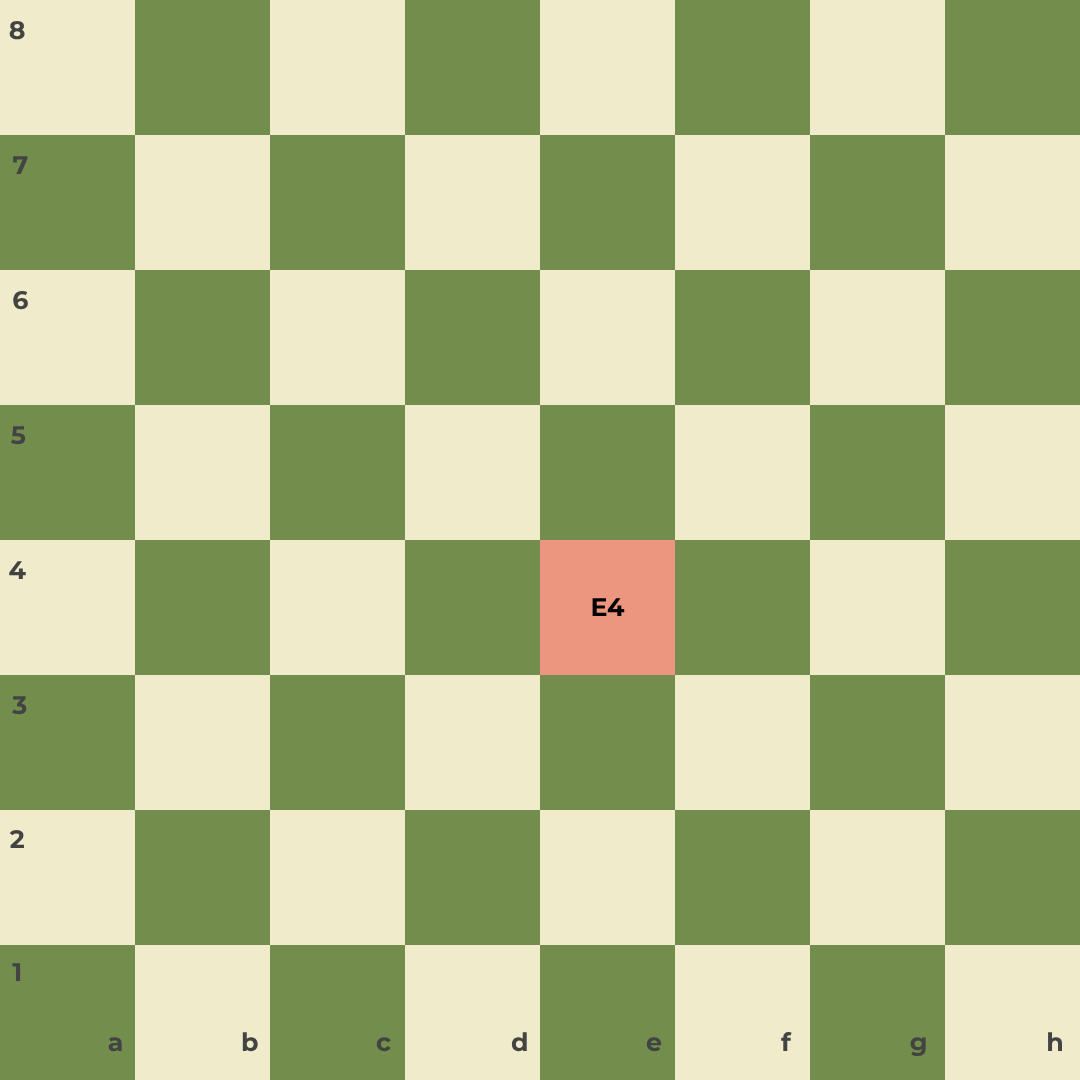
Remember: Files run vertically, ranks run horizontally, and every square has its own letter-and-number coordinate.
Step 3: Arrange the Back-Rank Pieces
The back rank is the row closest to each player where the king, queen, rooks, bishops, and knights begin the game. Each player has eight pieces to arrange, and placing them in the correct order is essential for starting a game of chess properly.
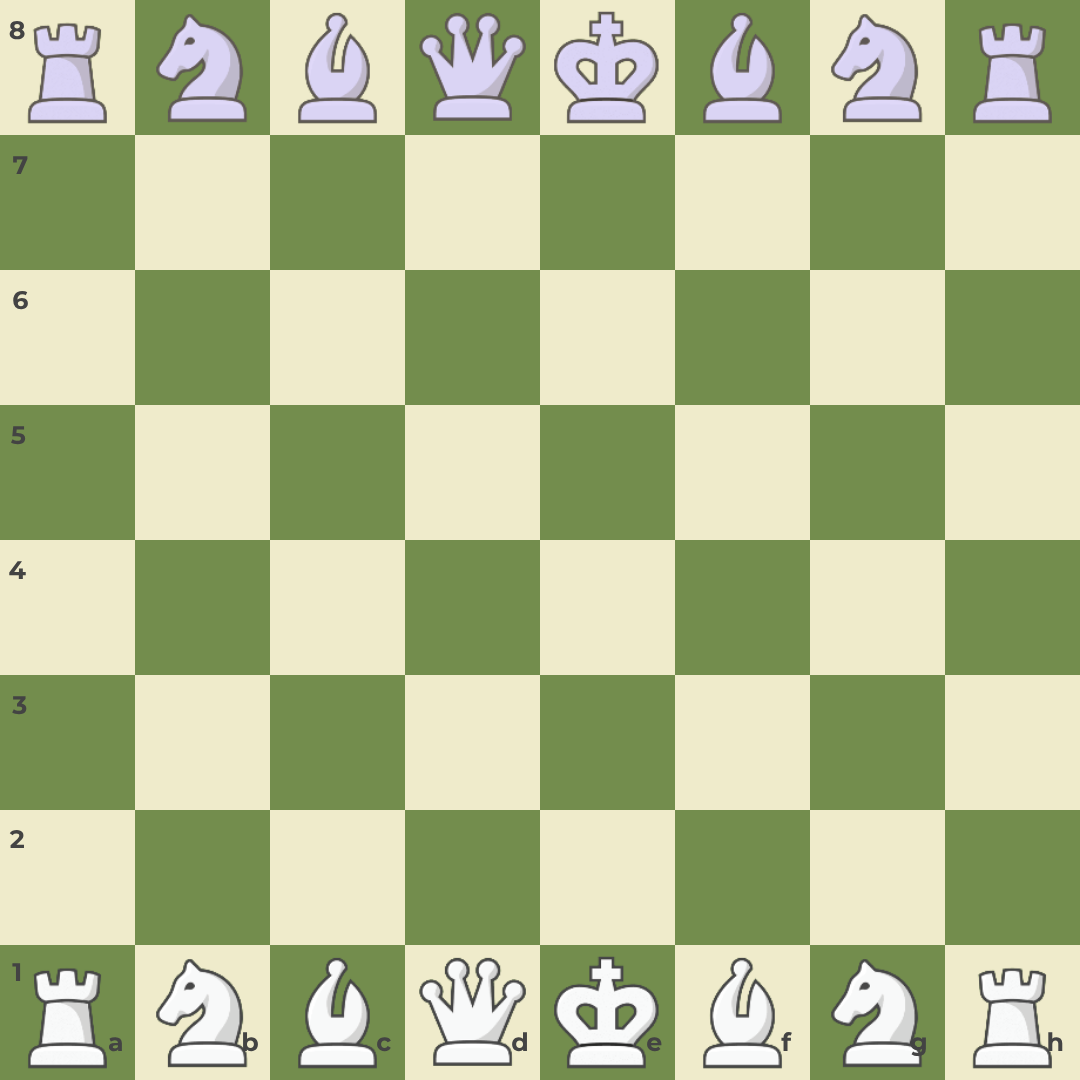
From left to right, when viewed from White’s side of the board, the white back rank follows this order:
Rook → Knight → Bishop → Queen → King → Bishop → Knight → Rook
Black’s pieces follow the same file arrangement on the opposite side of the board. Each player’s rooks occupy the corners, the knights stand beside the rooks, the bishops stand beside the knights, and the queen and king occupy the two central squares.
An easy way to remember the queen’s position is the rule “queen on her own color.” The white queen starts on a light-colored square (d1), while the black queen starts on a dark-colored square (d8). The kings occupy the squares immediately beside their queens.
Once you’ve arranged both back ranks correctly, you can move on to placing the pawns in the rows directly in front of them.
Step 4: Place the Pawns
Once you’ve arranged the back-rank pieces, the next step is to place the pawns. Each player starts with eight pawns, which form a row directly in front of their other pieces.
White’s eight pawns belong on the second rank (rank 2), while Black’s eight pawns belong on the seventh rank (rank 7). Each pawn should occupy the same file as the piece directly behind it. For example, White’s pawn on e2 sits directly in front of the white king on e1, while Black’s pawn on e7 sits directly in front of the black king on e8.
Once all the pawns are in place, both players should have 16 pieces arranged on the board, with the two middle ranks (ranks 3–6) left empty. Your chessboard is now correctly set up and ready for the game to begin.
Step 5: Check the Final Setup
Before starting a game, take a moment to check that all the chess pieces are in their correct starting positions. The diagram below shows the complete starting arrangement for both White and Black, with all 32 pieces placed on the board.
Use these three quick checks to make sure your chessboard is set up correctly:
1. The bottom-right square is light. When you sit on either side of the board, the corner square nearest your right hand should be light-colored.
2. Each queen starts on a square matching its color. The white queen belongs on a light-colored square, while the black queen belongs on a dark-colored square. Remember: “queen on her own color.”
3. Each player has 16 pieces. Each side starts with eight pawns and eight other pieces: two rooks, two knights, two bishops, one queen, and one king.
Once you’ve checked these three points, your chessboard is correctly set up and ready for play. You can now begin learning the rules, making your first moves, and developing your chess strategy.
Common Chessboard Setup Mistakes
Setting up a chessboard is relatively simple, but beginners can make a few common mistakes that lead to an incorrect starting position. Before beginning a game, check for these errors to make sure every piece is where it belongs.
1. Reversing the Chessboard
One of the most common mistakes is positioning the chessboard in the wrong direction. Remember the rule “white on the right.” The bottom-right square nearest each player must be light-colored. If this square is dark, rotate the board before placing the pieces.
2. Swapping the King and Queen
The king and queen occupy the two central squares on each player’s back rank, making them easy to mix up. Remember the rule “queen on her own color.” The white queen starts on a light-colored square (d1), while the black queen starts on a dark-colored square (d8). The king occupies the remaining central square beside the queen.
3. Arranging the Pieces in the Wrong Order
Another common mistake is placing the rooks, knights, and bishops in the wrong order. From left to right when viewed from White’s side, the correct back-rank arrangement is rook, knight, bishop, queen, king, bishop, knight, rook. Black follows the same arrangement on the opposite side of the board. Check that the rooks occupy the corners, the knights stand beside them, and the bishops stand beside the knights.
4. Placing Pawns on the Wrong Ranks
Pawns should not be placed on the back rank alongside the king, queen, rooks, bishops, and knights. White’s eight pawns belong on the second rank (rank 2), while Black’s eight pawns belong on the seventh rank (rank 7). Each pawn sits directly in front of a back-rank piece, leaving the four middle ranks empty at the start of the game.
Final Check
Before making your first move, confirm that the board is oriented correctly, both queens are on their own colors, the back-rank pieces follow the correct order, and all 16 pieces on each side occupy their proper starting squares. Once everything checks out, you’re ready to play!
FAQs
Which color moves first in chess?
White always moves first in chess, regardless of who is playing. After White makes the opening move, the players take turns moving one piece at a time, with Black making the second move. This alternating order continues throughout the game until a player wins, the game ends in a draw, or another ending condition is reached.
Does the queen go on her own color?
Yes, the queen always starts on her own color. The white queen is placed on a light-colored square (d1), while the black queen is placed on a dark-colored square (d8). This simple rule, often remembered as “queen on her own color,” helps beginners arrange the chess pieces correctly at the beginning of a game.
How many pieces does each player start with?
Each player starts with 16 chess pieces, making 32 pieces in total on the board at the beginning of a game. Each player has eight pawns, two knights, two bishops, two rooks, one queen, and one king. Both players arrange their pieces in the same formation on opposite sides of the board.
Which square should be at the bottom right?
The bottom-right square must be light-colored when the chessboard is positioned correctly. This is easy to remember with the rule “white on the right.” From White’s perspective, the bottom-right square is h1, while from Black’s perspective, the bottom-right square is a8. Both are light-colored squares.
Can you rotate a chessboard during a game?
Yes, you can physically rotate a chessboard during a casual game, but it is best to keep the board in the same orientation throughout the game. Rotating it can make it harder for both players to follow the position of the pieces and remember the board coordinates. In a formal tournament, avoid adjusting or rotating the board without permission from your opponent or the arbiter. The pieces must remain on their respective squares, and rotating the board does not change the rules or the position itself.
Conclusion
Setting up a chessboard correctly is the first step toward learning and enjoying the game. Remember to position the board with a light square in the bottom-right corner, arrange the back-rank pieces in the correct order, place each queen on her own color, and position the pawns on the second and seventh ranks. Once you’ve checked these details, your chessboard is ready for play.
Now that you know how to set up a chessboard, the next step is learning about the six chess pieces, their legal moves, and how to use them effectively. Understanding how each piece moves and captures will help you follow the rules, develop basic strategies, and feel more confident as you begin playing chess.



0 Comments